
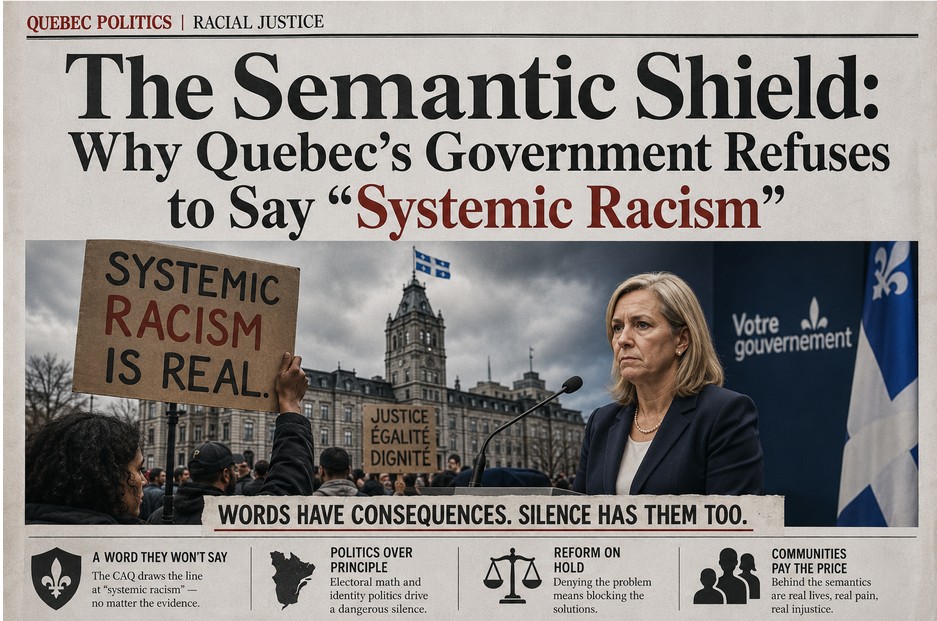
The Semantic Shield: Why Quebec’s Government Refuses to Say
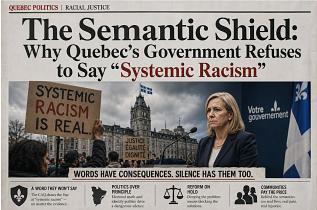
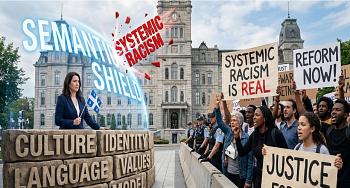

Once you step into the halls of Quebec's National Assembly, you will understand that words are considered an explosive weapon. However, there is one particular term that politicians here cannot abide by: "systemic racism.
Premier Christine Frechette and her Coalition Avenir Québec (CAQ) government refuse to say the word and with good reason, given the avalanche of scandals that have struck the city of Montreal in recent years, not to mention the shocking disclosure last week of Montreal Nord cops keeping Black men's hair as "trophies. The government has been adamant in its refusal to recognize that its public institutions are biased against people of color when asked to do so by opposition parties and civil rights groups. They will swiftly denounce instances of discrimination, but systemic is a red line for them.
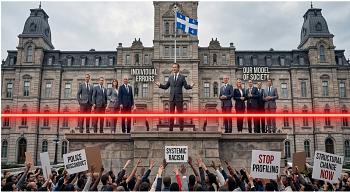
This language deadlock, to critics, is political cowardice that stunts effective reform. To the government it is a measured response to the vision of Quebec's distinct model of society. But what is going on in Quebec City is more than just a game of words it's a strategic, carefully orchestrated word game.
The Collective Guilt Trap
In order to comprehend why the CAQ considers “systemic racism” as a political biohazard, one must consider how the term is understood by the party's nationalist base. The term systemic is seldom used by Quebec's mainstream political debate as a neutral sociological description of flaws in their systems. Rather, it is a moral charge of national sin. Dr. Émilie Tremblay, a sociologist with an interest in Quebec nationalism and public policy, notes that this opposition is part of a distinctly defensive past.
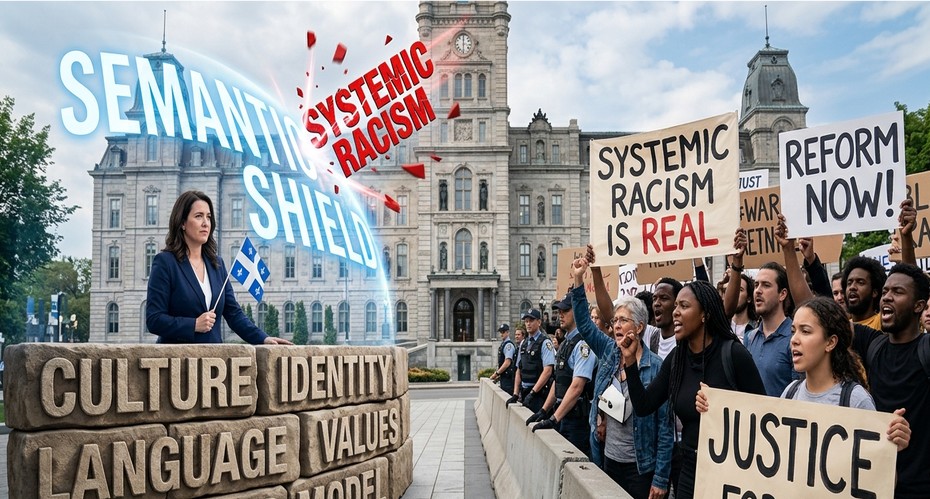
“The word systemic is used by the CAQ and by many nationalist intellectuals as an ideological word from Anglo-American academia, Tremblay says. In a culture that is historically defined by its own struggle to survive as a linguistic minority in North America, anything that suggests that the majority group is oppressing them is rejected out of hand and there is an unspoken fear that admitting systemic racism is tantamount to calling the entire Quebecois collectively racist”.
With its rejection, Fréchette's government makes itself an obstacle to the unearthing of "unfair" external guilt-tripping by ordinary Quebecers. This defense is a strategy in which the government argues that although there are bad people out there, and they must be held to account, Quebec as a whole is a fairer, more equal society and its administration is good.
Economic Arithmetic of Denial
The refusal to say the words is not just issue of cultural identity; it is also an issue of cold electoral math. Montreal is a city that is multi-ethnic, diverse and where community groups are loudest on the demand for systemic reform – the CAQ's path to power does not go through there. Rather, the party has secured its majority in the demographically older, predominantly French-speaking and anti-Montréal social justice discourse suburban and rural regions of the province.
When politicians exhort the public to tackle the "systemic barriers" that exist, for these voters, it is akin to targeting the very public bodies they created and depend on. The government's linguistic policy is meant to allay the fears of this important voting segment, says Alain Babineau, a former RCMP officer who is the director of police sector relations for the Red Coalition.
It's electoral math," Babineau says. By talking about these scandals as isolated cases of misconduct, the government lets its base know that the system is working, while depriving racialized citizens of safety and dignity who have to interact with these systems on a daily basis.
With this political tactic, the CAQ can paint a comforting picture: The government is above board, the laws are solid, and any problems are just a few bad apples that will be addressed with regular disciplinary procedures.
The Cost of the Semantic Shield
The CAQ's semantic shield may have its merits at the ballot box but has a price tag in terms of human rights consequences that human rights advocates and policy experts are concerned with. The government ignores the systemic nature of the issue and blocks the development of systemic solutions. If a building does not acknowledge it has a structural problem, it can't endorse a structural resolution. From police reform to judicial appointments to collecting race-based demographic data, everything comes to a halt.
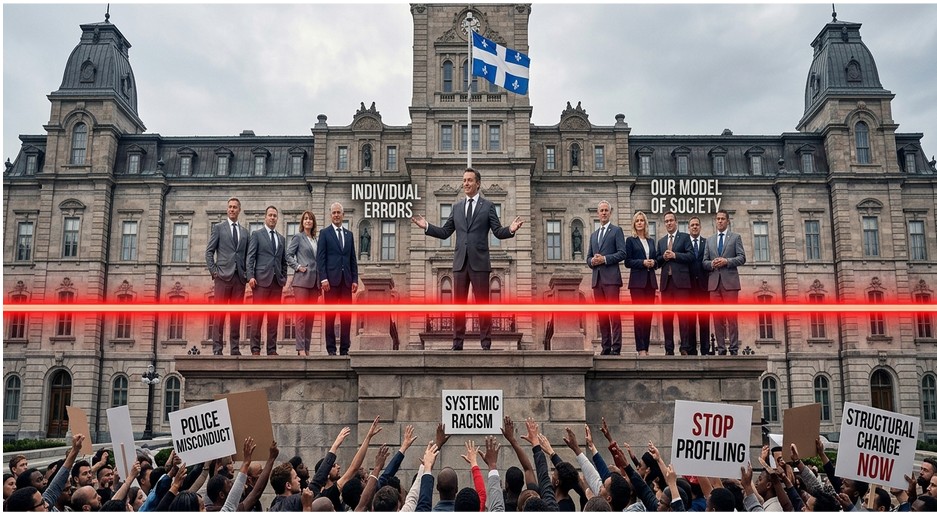
This semantic smokescreen is having real-life psychological and administrative consequences, says Dr. Myrna Lashley, an associate professor of psychiatry at McGill University and a cultural safety expert.
That is, Dr. Lashley explains, “Language dictates policy. By dismissing the disease as "individual mistakes" the government has thrust the burden of proof onto the shoulders of the marginalized victim, while protecting the institution from any kind of "deep and uncomfortable" auditing which is desperately needed.
The Breaking Point
The government's rhetoric and reality are coming to a head. Civil rights organizations are rallying and public disgust at the mounting abuses at Station 39 is growing, turning the CAQ's semantic response into more of an avoidance strategy than a principled response.
Solid political leadership means having the courage to confront uncomfortable truths, not to be protected by a wall of words. Any offers of reform will remain hollow until Premier Fréchette and her government are ready to acknowledge the structural obstacles that divide Quebec and that must be overcome. Sentiment can be the deciding factor in a victory at the polls, but it cannot mend a ruptured society.
Edit your HTML online, remove unwanted formatting, and create cleaner documents effortlessly.