The Transparency Gap: Rising Skepticism over Mayor Maude Marquis-Bissonnette’s Budget Optimization Strategy
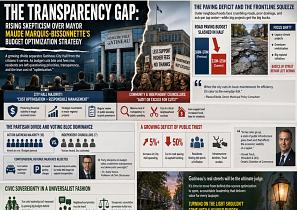
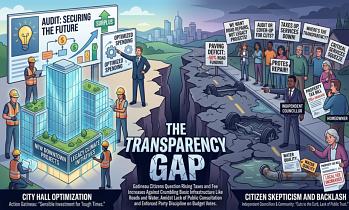

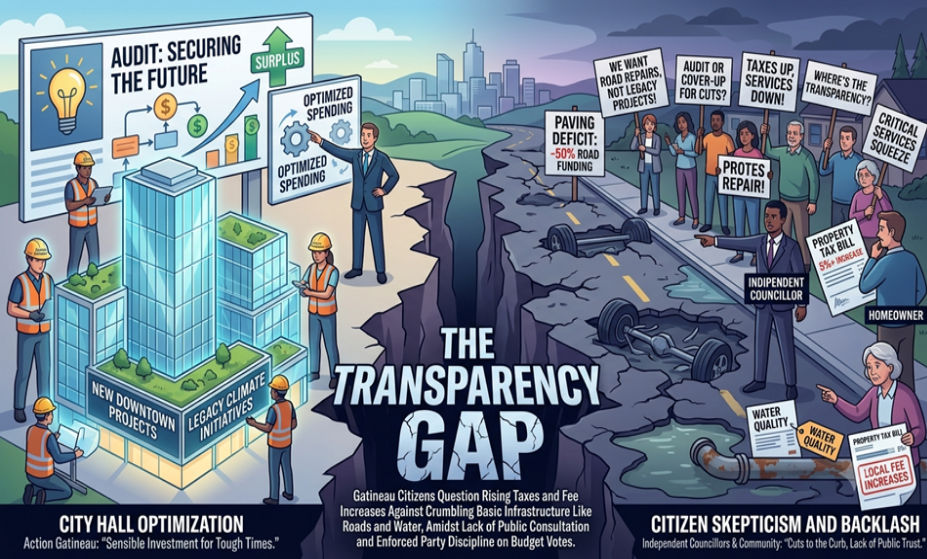
A split is opening up between Gatineau City Hall and its citizens. After the city's most recent municipal budget passed closely, there is a lot of pressure on Mayor Maude Marquis-Bissonnette from community groups and independent councillors over her aggressive promotion of "cost optimization. The Action Gatineau-led majority government sees it as a good and sensible investment of the financial security in the tough financial climate; its opponents are not as enthusiastic. They claim that an audit is a way to cover up the cuts in critical neighbourhood services that go unnoticed by the public, and at the same time raise property taxes and utility bills for taxpayers on the Main Street of any community.
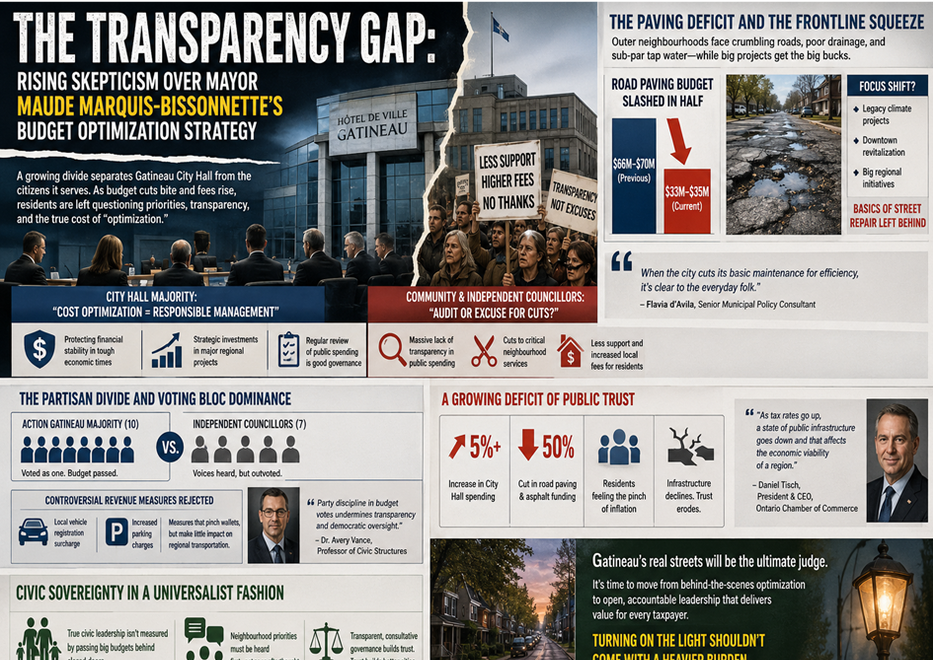
The battle is over the mayor's request for an audit of all the city's money in every department of city hall. Independent members of the executive committee are worried about the enormous lack of transparency this is creating in public spending, while the committee itself is presented as a regular review of public spending. The community is being left with "less support and increased local fees," they add.
The Paving Deficit and the Frontline Squeeze
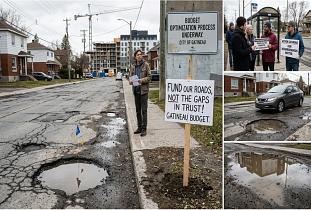
It's easiest to see the true impact of this cost-matching crusade on local roads. Crumbling pavement, foul seasonal drainage and sub-par tap water quality have been an issue for residents for years in the outer districts. The administration will have big bucks to spend on big projects in the region, but not much for the streets of each neighbourhood.
The biggest problem is the amount of road paving money and asphalt money in the city has been cut in half, and it's being estimated to be between $33 million and $35 million. Mayor Marquis-Bissonnette has said the figures are accurate as long-term commitments from the province and federal government are part of her overall infrastructure costs. Independent council members, however, contend that the numbers are a political trick that will not address the pothole problem that is causing axles to crack in parts of the suburbs.
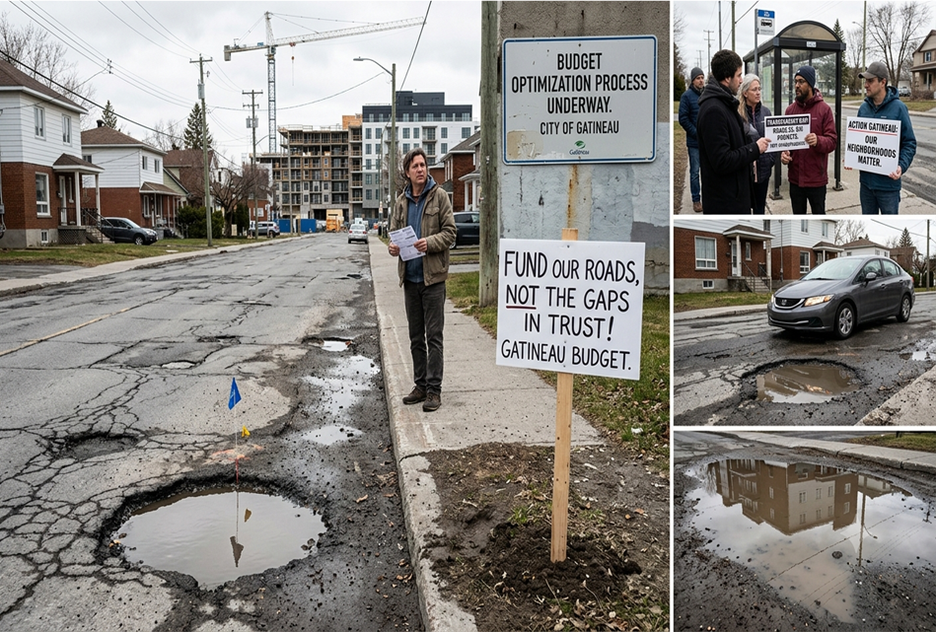
Legacy climate projects and downtown revitalization, rather than the fundamentals of street repair, have caused a vast community backlash regarding the costs and benefits of the approach. Community outrage has grown regarding the costs and benefits of the approach as the focus has been on legacy climate projects and downtown revitalization, rather than the basics of street repair. But when the city cuts its basic maintenance for efficiency, it's clear to the everyday folk, says Flavia d'Avila, a senior municipal policy consultant.
Municipal governments, in the end, are evaluated by their performance in providing basic services," d'Avila says. “If an administration is doing all that they can to cut the line items in order to pay for a huge political agenda, those cuts are at the curb of the suburban neighbourhood. The risk of this is that the community in the suburbs will perceive a real degradation of living standards which will make it more difficult to implement macro-scale environmental and corporate projects.
The Partisan Divide and Voting Bloc Dominance
The budget controversy has created a big rift in council chambers. Gatineau has a very unusual form of political party: It's a "whipped" party, one that's left the independent councillors simply paralyzed. By voting party discipline, the ten of the Action Gatineau party bloc united to approve the financial plan of the government's head, thus putting opposition on one side.
A budget that fails to reflect the government's ability to deliver on priorities such as tax and spend is evidence of its failings on the part of councillors from the outer boroughs. But while the city found $6 million in administrative savings, it balked at using controversial revenue measures such as a local vehicle registration surcharge or increased parking charges measures that pinch wallets but make no dramatic improvement to regional transportation, critics say.
The City Council's meetings would be completely undermined in transparency of the finances if party discipline was enforced on these proceedings, says civic structures professor Dr. Avery Vance.
According to Dr Vance, “The current government leaves independent councillors in the dark and unable to do anything that will adversely affect their constituents, but it will affect them anyway, as they must enforce fee increases without considering the valid issues of affordability for households.”
A Growing Deficit of Public Trust
City departments are starting to implement these streamlined budgets and community advocates say that public trust is being eroded irretrievably. Yet there is a distinct disrespect for regular residents, who already are reducing their spending due to inflation. City Hall is increasing their spending by more than 5%, but they are actually reducing the amount of needed road work. The administration claims to be taking a prudent and protective approach, and the property taxes are less than those in larger Quebec cities.
The Ontario Chamber of Commerce's President and CEO, Daniel Tisch, is an economic competitiveness watcher for the National Capital Region. He says there is a weak governance system at local level, resulting in higher perceived financial insecurity. “As tax rates go up, a state of public infrastructure goes down and that affects the economic viability of a region,” Tisch writes.
Civic sovereignty in a Universalist fashion
Current administration has a great need for a transformation towards transparency in the ongoing budget standoff, especially in Gatineau. You can't tell the degree of civic leadership by a party's success in a council chamber or by the passage of a huge spending bill. A lack of trust between neighbourhood and City officials will persist if the neighbourhood priorities are set in a secondary, not primary, venue.
More so than in a controlled press scrum, the real streets of Gatineau's neighbourhoods will be the judge of the administration of Mayor Marquis-Bissonnette. A need to change from behind-the-scenes optimization policies to transparent, consultative governance must be addressed. In this economic climate, the city has to be able to show that it can offer its citizens value added benefits. The city has to prove they can offer the regular taxpayer an added value benefit for turning the light on.
Clean up your HTML code and format your content with a fast, browser-based editor.