
The Shifting Skyline: Gatineau Council under Fire for Fragmented Affordable Housing Approvals
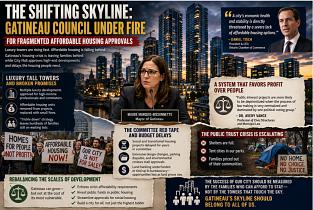
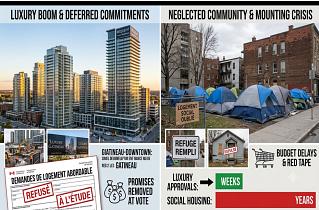
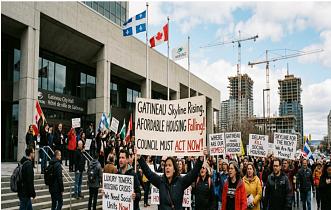

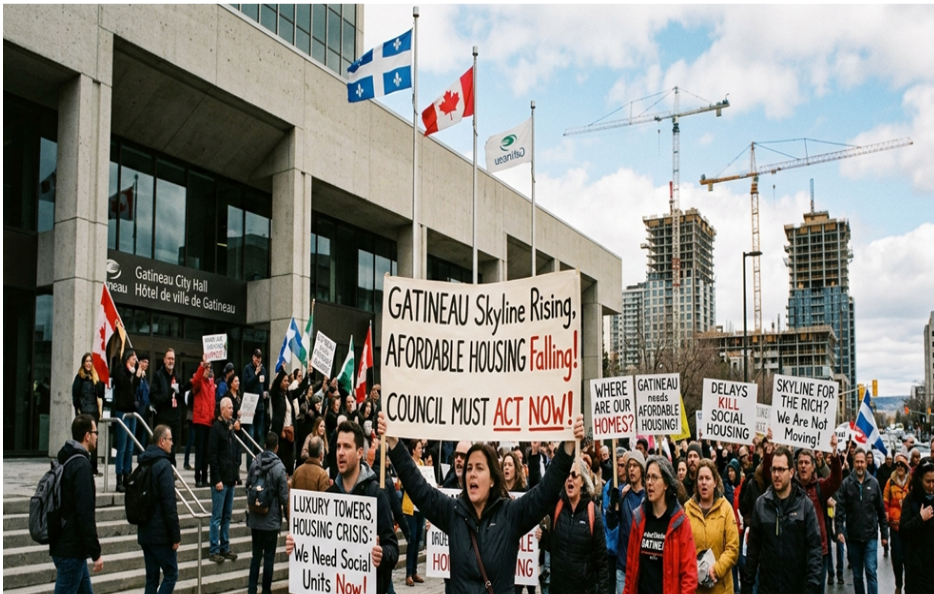
Gatineau's skyscrapers in downtown have sparked public outrage. The city's housing crisis is having a negative impact on Maude Marquis-Bissonnette, who's feeling the pressure from the community as luxury glass high-rises quickly rewrite the rules of the city's skyline, and on the city council. Critics and neighbourhood coalitions say that while the administration rushes through high-end corporate developments, it has been slow to deliver, scaled back, and even scrapped its planned social and transitional housing units in urban core areas.
The tug of war over the policy has shown some very obvious inconsistencies at City Hall. The executive committee has publicly stated its commitment to housing affordability, but independent councillors and housing advocates caution the city's housing regime is actively excluding low and middle income families, leaving the most vulnerable people in the city completely upended.
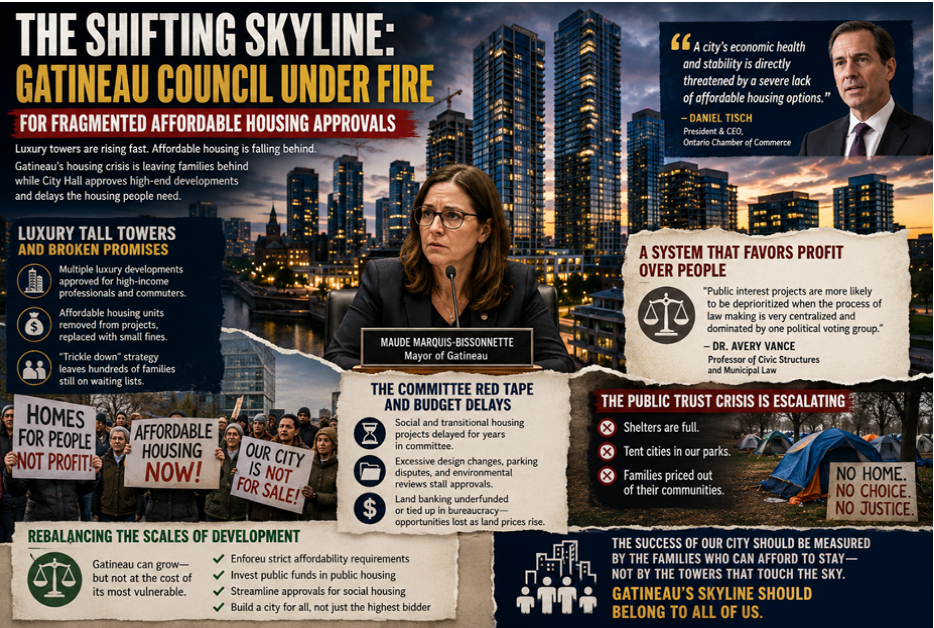
Luxury Tall Towers and Broken Promises
The evolution of the central districts of Gatineau is a story of great economic contrasts. In the last year, council has approved a number of large scale residential developments that are targeted at high income professionals and commuters. The reason for the ruling Action Gatineau's party is that the market will relieve itself when the total volume of housing is increased.
But housing advocates note that this "trickle down" strategy isn't doing much for the hundreds of families who remain on municipal waiting lists. Worse, several projects that were once presented on a firm basis with percentages set aside for affordable units have simply had those requirements deleted at the end of committee discussions, and minor financial penalties paid in lieu of providing the affordable units.
This is a policy of building luxury development projects, rather than shelter for the community, which has invited open protest. According to Flavia d'Avila, a senior urban development and municipal policy consultant, a disjointed housing policy leads to an "overwhelming social imbalance.
“With just that approach, a city can't solve a housing problem, d'Avila says. A consistent pattern of approval for high-yield commercial projects and the absolute back-burner status of social and transitional housing projects sends a clear message about whose neighbourhood it is: who has the money. The real threat with this type of fragmentation is that it leads to rapid gentrification, which erodes the existing social fabric and sends low-income residents out the door from the very neighbourhoods where they depend on public transit and community services”.
The Committee Red Tape and Budget Delays
Requests for transitional housing and special social units are sent back and forth to committee with minor design changes, parking issues, and extended environmental reviews, with approval taking years to be granted.
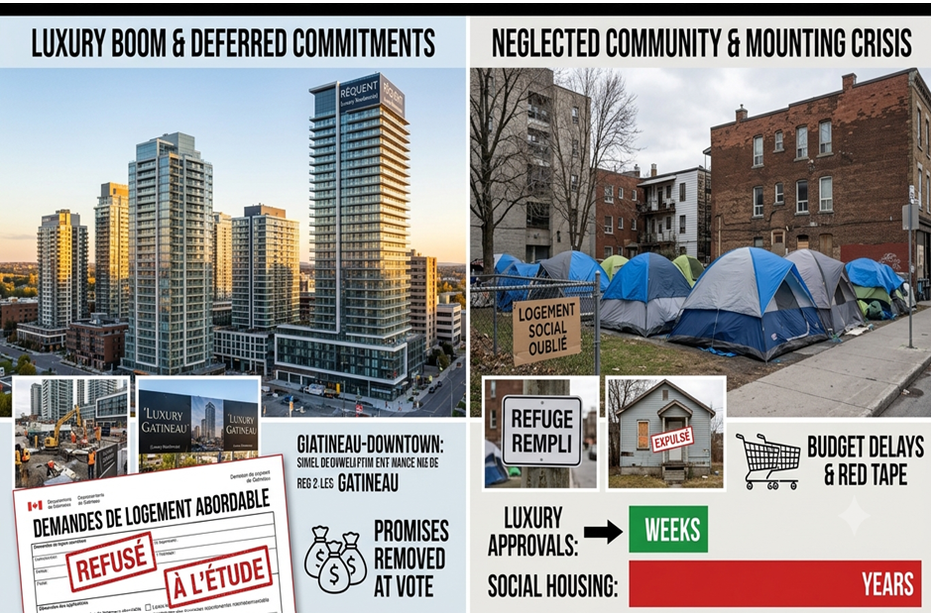
They note that the amount of money that the City allocates for land banking – using public funds to purchase affordable housing before it is taken by a private developer – has been all too frequently underfunded or subject to bureaucratic wrangling, leaving the City with nothing when land values soar.
The current council set-up puts public projects in a defensive position, Dr. Avery Vance, a professor of civic structures and municipal law, said.
“Public interest projects are more likely to be deprioritized when the process of law making is very centralized and dominated by one political voting group, notes Dr. Vance. The current administration has allowed public projects to languish in committees, with no attendant tax revenues for the city, while luxury developments are moving quickly because they come with a massive corporate legal team and immediate tax revenues. By allowing public projects to languish in committee, the current administration creates a severe accountability problem, leaving the community to suffer the consequences of a worsening crisis”.
The Public trust crisis is an Escalating Problem:
This discontent in council chambers is bleeding over into the everyday life of neighbourhoods and families are finding it difficult to afford the rising rents. Community groups highlight the irony of local shelters being full, tent city living in local parks, and city council celebrating the completion of new high-rise buildings. For those being evicted or priced out of their lifetime neighbourhoods, though, those distant, multi-year plans do little for them today.
Daniel Tisch is the President and CEO of the Ontario Chamber of Commerce, and he is responsible for monitoring the competitiveness of the region and public infrastructure in the National Capital Region. He says not taking a proactive stance on greater housing affordability in the area hurts the local economy.
“A city's economic health and stability is directly threatened by a severe lack of affordable housing options,” Tisch points out. Local governments must understand that providing affordable housing is not a charity mission but a critical component of essential infrastructure that must be in place to support a thriving economy if working families, service industry workers and young professionals can no longer afford to live in the urban core, local businesses are short-staffed and regional competitiveness is eroded”.
Rebalancing the Scales of Development
There's no doubt about it, the continuous battle over the skyline of Gatineau is a clear sign that the city's housing strategy must undergo a dramatic turnaround. Economic growth needs to be combined with a very strong will to defend everyday people if there is to be any real municipal leadership. Social and transitional housing will continue to be an afterthought at City Hall and the rich-poor gap in this city will continue to grow.
In the end, the success of Mayor Marquis-Bissonnette's government will be measured by the number of normal families who can afford to live in Gatineau, rather than the number of luxury towers the government approves. Restoring public trust requires a rejection of bureaucratic red tape, a commitment to enforce strict affordability requirements on developer and a commitment to spend public funds on public housing. Now is the time for City Hall to demonstrate that the City's skyline is for all the people, not the highest bidder.